
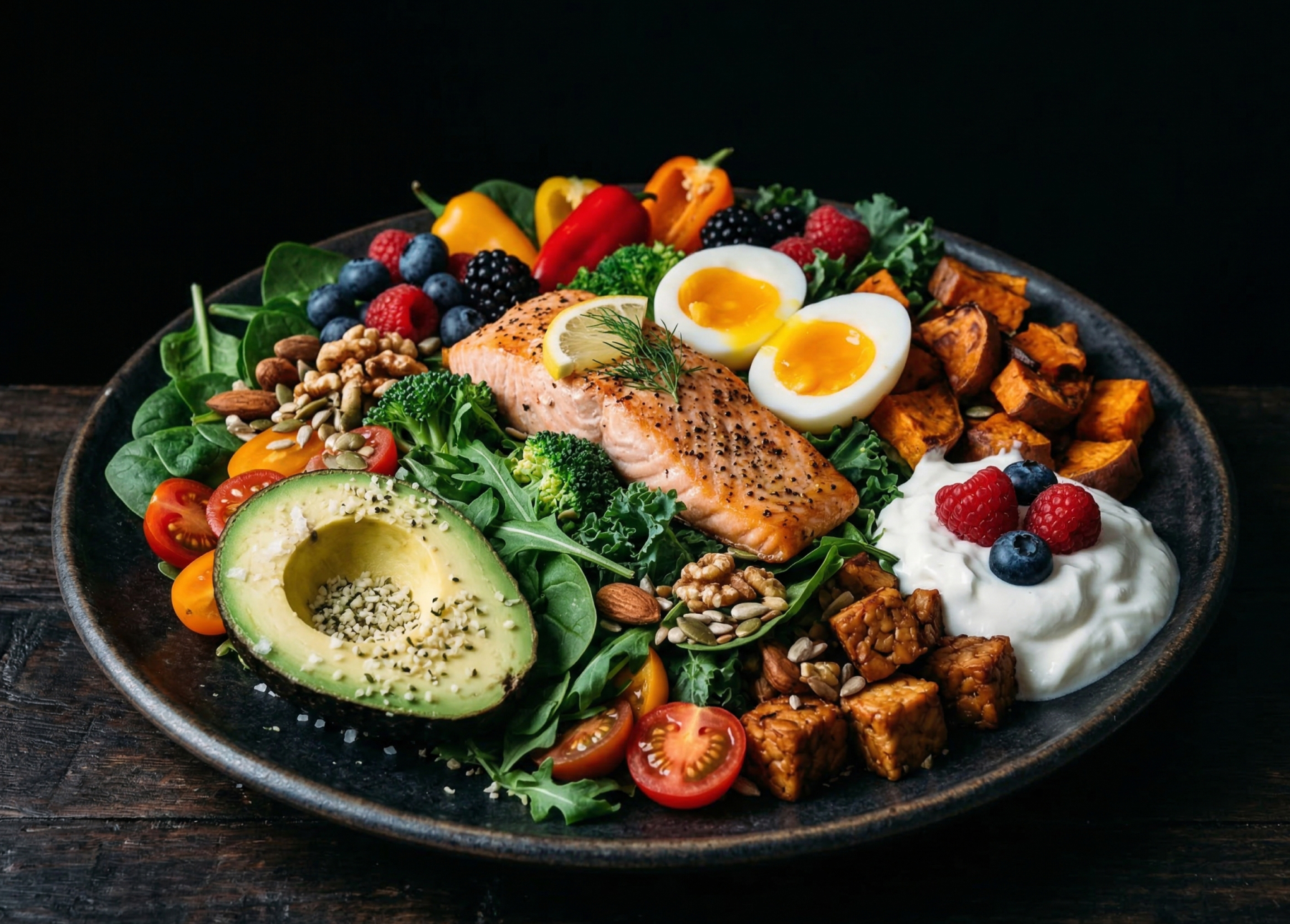
Why Inflammation Matters
Inflammation is part of your body’s natural healing process. But when inflammation stays chronically elevated, it can quietly accelerate aging and increase the risk of conditions such as heart disease, diabetes, cognitive decline, joint pain, and metabolic dysfunction.The Anti-Inflammatory Diet is not a fad or a restriction-based plan. It’s a sustainable way of eating that helps calm chronic inflammation and supports long-term health and longevity.
What Is an Anti-Inflammatory Diet?
An anti-inflammatory diet focuses on whole, minimally processed foods that support blood sugar balance, gut health, and cardiovascular health - key drivers of healthy aging.It closely resembles a Mediterranean-style eating pattern, one of the most researched dietary approaches for longevity.
What to Eat More Of
Build your plate around:
- Colorful vegetables & fruits (leafy greens, berries, peppers, tomatoes, broccoli)
- Healthy fats (extra-virgin olive oil, avocado, nuts, seeds)
- Omega-3 rich fish (2x/week) (salmon, sardines, trout)
- High-fiber carbohydrates (beans, lentils, oats, quinoa, sweet potatoes)
- High-quality protein (fish, poultry, eggs, tofu/tempeh, Greek yogurt)
What to Limit
Reducing these foods can significantly lower the inflammatory burden over time:
- Ultra-processed foods and packaged snacks
- Sugary drinks and excess sweets
- Refined carbohydrates (white bread, pastries)
- Processed meats (bacon, sausage, deli meats)
- Excess alcohol
Consistency matters more than perfection.
Longevity & Anti-Aging Benefits
Following an anti-inflammatory eating pattern has been associated with:
- Lower inflammatory markers (such as hs-CRP)
- Improved cardiovascular and metabolic health
- Better gut microbiome balance
- Reduced risk of chronic disease
- Improved “healthspan” - not just lifespan
In large studies, people who consistently follow anti-inflammatory or Mediterranean-style diets live longer and healthier lives, with fewer years spent managing chronic disease.
Try This, This Week
Add one extra vegetable to lunch and dinner Swap butter or vegetable oil for extra-virgin olive oil Eat fish twice this week (or discuss omega-3 supplementation) Choose whole grains over refined carbs Add protein at breakfast to stabilize blood sugarSmall changes add up.
Simple Anti-Inflammatory Day
- Breakfast: Greek yogurt, berries, chia seeds, walnuts
- Lunch: Large salad with mixed vegetables, salmon or chicken, olive oil & vinegar
- Snack: Apple with almonds or hummus with veggies
- Dinner: Stir-fried vegetables, fish or chicken, quinoa
- Dessert: Fresh fruit or a small piece of dark chocolate
Anti-Inflammatory Grocery ListProduce:
Leafy greens, berries, broccoli, peppers, tomatoes, onions, garlic
Proteins: Salmon, sardines, eggs, chicken, tofu, lentils, beans
Healthy Fats: Extra-virgin olive oil, avocados, walnuts, almonds, chia/flax seeds
Whole Grains: Oats, quinoa, brown or wild rice
Fermented Foods: Greek yogurt, kefir, sauerkraut, kimchi
A Final Note
Food is the foundation of inflammation control and longevity. Supplements can be helpful when personalized and used appropriately - but they work best when layered onto a nutrient-dense, anti-inflammatory diet.
References
- Schwingshackl L, et al. Mediterranean diet and inflammatory biomarkers: systematic review and meta-analysis of randomized trials. Nutrients. 2020.
- Zhang Y, et al. Mediterranean diet adherence and all-cause mortality. JAMA Network Open. 2024.
- Calatayud M, et al. Anti-inflammatory dietary patterns and inflammatory markers: systematic review. Clin Nutr. 2022.
- Willett WC, et al. Optimal dietary patterns for healthy aging. Nature Medicine. 2025.
.svg)

.svg)


.svg)
.svg)

.svg)