When we talk about longevity, we often focus on hormones, inflammation, cardiovascular risk, or metabolic health. But there is one variable that consistently predicts healthspan, resilience, and independence:
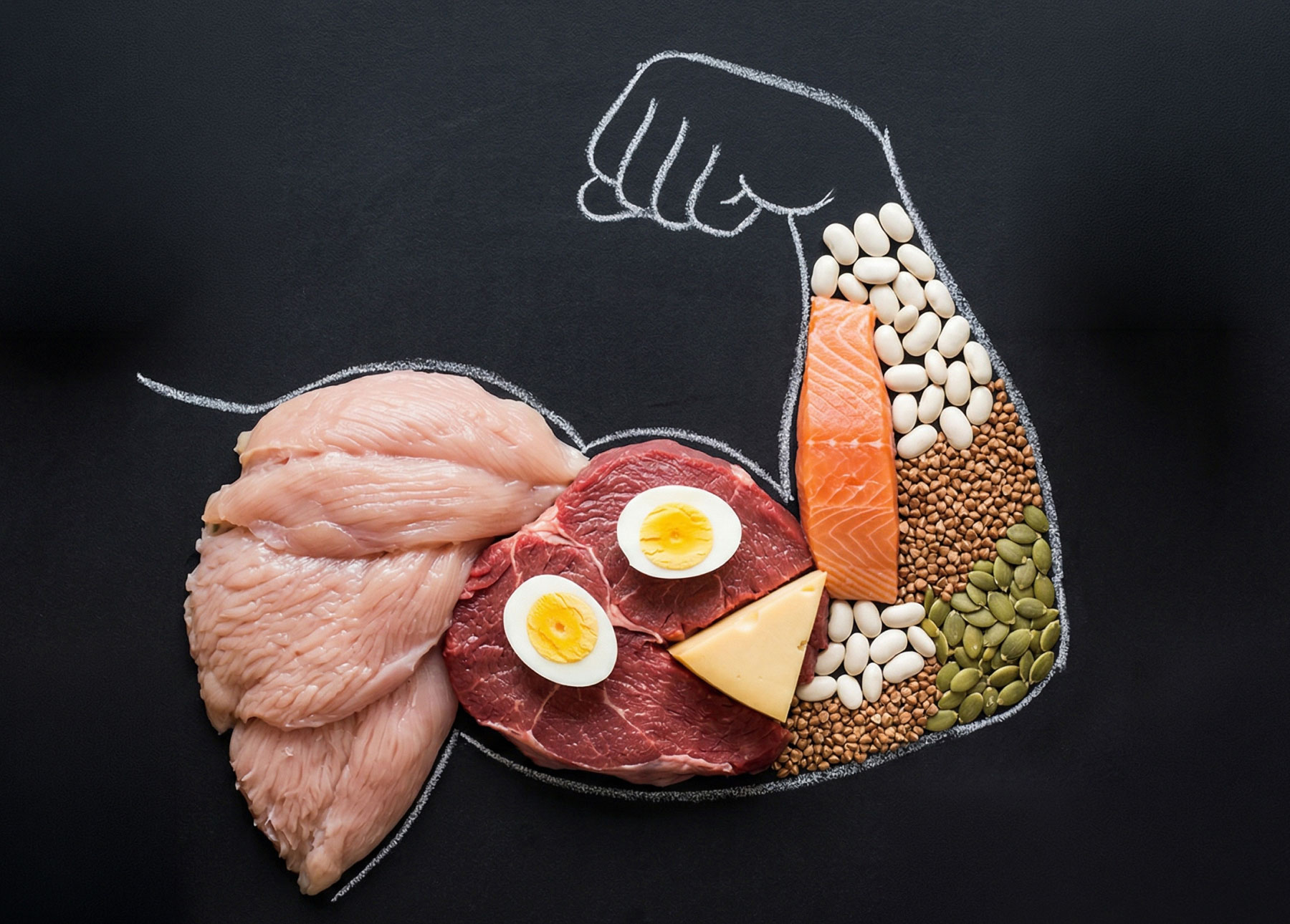
Muscle is not cosmetic. It is metabolic, hormonal, structural, and protective. And maintaining it requires one key nutrient: protein.
Beginning around age 30, we naturally lose muscle mass at a rate of 3–8% per decade. After 60, that rate accelerates. This process — sarcopenia — is associated with:
• Decreased strength and balance
• Increased fall risk
• Insulin resistance
• Reduced metabolic rate
• Frailty and loss of independence
• Higher mortality risk
In longevity medicine, muscle is often referred to as a biomarker of vitality.
The goal is not simply to live longer — but to remain strong, functional, and metabolically robust.
As we age, muscle becomes less responsive to protein intake. This is called anabolic resistance.
Older adults require more protein per meal to stimulate muscle protein synthesis compared to younger individuals.
In practical terms:
• A 25-year-old may stimulate muscle growth with ~20g of protein
• A 60-year-old may require 30–40g in a single meal
This means spreading small amounts of protein throughout the day is often inadequate.
The outdated RDA of 0.8 g/kg/day is the minimum to prevent deficiency — not the optimal intake for muscle preservation.
For patients focused on longevity and strength:
Evidence-supported target: 1.2–1.6 g/kg/day
For highly active individuals: Up to 1.6–2.0 g/kg/day
Example: A 70 kg (154 lb) individual → Optimal range: 84–112 grams per day
This should ideally be divided into:
• 30–40g protein per meal
• 2–3 high-quality protein feedings daily
Not all protein is equal. To stimulate muscle protein synthesis effectively, protein should contain adequate leucine, the amino acid that activates the mTOR pathway and signals muscle repair.
High-quality protein sources:
• Eggs
• Fish (salmon, sardines)
• Grass-fed beef
• Chicken and turkey
• Greek yogurt
• Whey protein
• Collagen (supportive, but incomplete — best paired with other protein)
Plant-based diets can absolutely support muscle — but often require higher total intake, strategic combinations (legumes + grains), and attention to total leucine content.
Muscle is a major site of glucose disposal. More muscle mass:
• Improves insulin sensitivity
• Reduces visceral fat accumulation
• Enhances resting metabolic rate
• Supports mitochondrial function
This is why protein intake and resistance training are central pillars of metabolic longevity.
Protein alone does not preserve muscle. The signal must be triggered by resistance training, load-bearing activity, and mechanical stress.
Even 2–3 sessions per week of resistance training significantly improves muscle protein synthesis in adults over 50.
The combination of:
• Adequate protein
• Progressive resistance training
• Adequate sleep
• Optimized hormonal health
…is the most reliable strategy to maintain muscle into your 70s, 80s, and beyond.
In individuals with normal kidney function, higher protein intake has not been shown to cause kidney damage.
Preserving muscle mass is not bodybuilding. It is metabolic insurance.
Many longevity-focused patients unintentionally under-consume protein, especially at breakfast.
1. Start your day with 30g of protein. Eggs + Greek yogurt or a high-quality whey shake.
2. Build meals around protein first. Vegetables and healthy fats are added — protein is the anchor.
3. Lift weights 2–3 times per week. Strength is a predictor of lifespan.
4. Track intake for one week. Most people underestimate how much they need.
If you want to:
• Maintain independence
• Protect cognitive function
• Improve metabolic flexibility
• Reduce frailty risk
• Age with strength and resilience
Protein intake and muscle preservation are non-negotiable.
Longevity is not just about extending years. It is about preserving power.
You can find protein recommendations anywhere. What you won’t find is a practice that ties your protein strategy to your hormone levels, your inflammatory markers, your body composition data, and your long-term performance trajectory — and adjusts it as your biology changes.
That’s what we do at Senolytix.
Muscle preservation is not a standalone recommendation for us. It’s a measurable, trackable outcome inside a comprehensive longevity protocol — one where nutrition, training, hormones, and recovery all work together by design.
• Body composition analysis. We track lean mass, visceral fat, and metabolic rate over time — giving you objective data on whether your protocol is working, not just a feeling.
• Protein strategy tied to labs. We calibrate protein targets to your metabolic profile, insulin sensitivity, kidney function, and training load — not to a generic recommendation.
• Hormone optimization. Testosterone, growth hormone signaling, and thyroid function all influence muscle protein synthesis. We assess and optimize these pathways as part of your protocol.
• Resistance training guidance. We help patients understand the type, frequency, and intensity of training required to maintain muscle — because the right stimulus matters as much as the right nutrition.
• Peptide therapy integration. For appropriate patients, targeted peptides can support muscle recovery, body composition, and metabolic flexibility alongside nutrition and training.
This is the difference between general advice and a precision strategy. Between knowing what to eat and knowing exactly what your body needs.
We don’t guess at your protein needs. We measure, optimize, and track.
Muscle mass is one of the strongest predictors of how well you age. At Senolytix, we combine body composition tracking, advanced metabolic and hormonal diagnostics, personalized nutrition strategy, and structured training guidance to ensure you’re not just eating enough protein — you’re building and maintaining the lean tissue that protects your health for decades.
This is longevity medicine built around strength, not just survival.
At Senolytix, we continue to refine our approach to muscle preservation as a central pillar of longevity medicine. Current areas of focus include:
• Integrating body composition data with hormonal and metabolic panels to create more precise protein and training prescriptions
• Expanding peptide therapy protocols that support muscle recovery, lean mass retention, and metabolic flexibility in aging patients
• Developing structured resistance training frameworks tailored to our patients’ functional goals, injury history, and performance targets
• Exploring the connection between sarcopenia, chronic inflammation, and senescent cell accumulation — and how targeted interventions may slow muscle loss at the cellular level
Muscle is where longevity becomes tangible. We’re committed to keeping you strong. Expect more in future newsletters.
If you’re ready to move beyond generic protein advice and build a measurable strategy around muscle preservation, metabolic health, and long-term performance, we’d welcome the conversation.
Schedule a consultation at senolytix.com
.svg)


.svg)
.svg)

.svg)
