
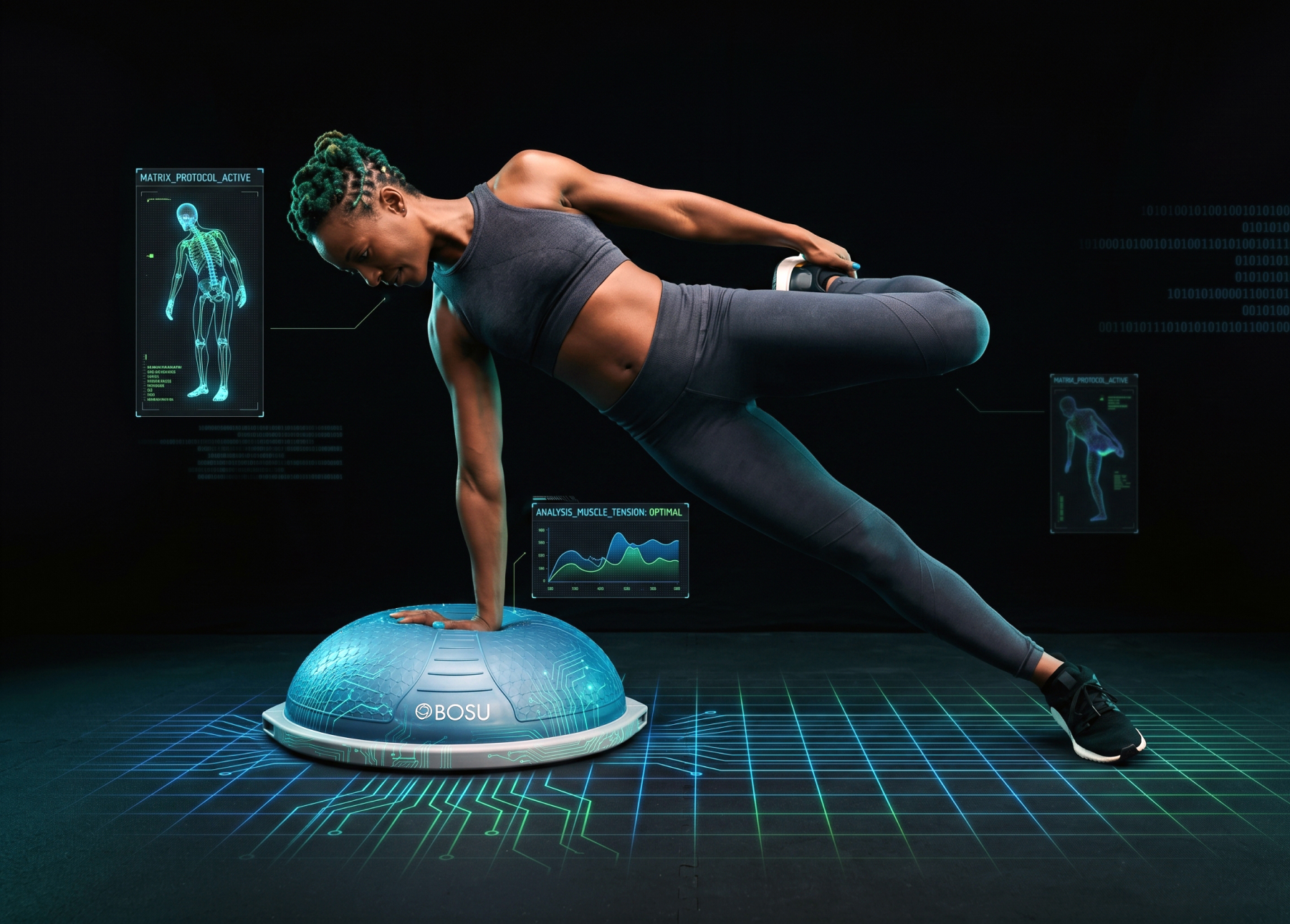
As we age, many people focus on strength, weight, and heart health — and all of those matter. But one of the most overlooked parts of healthy aging is: balance.
Balance is what helps you move confidently, react quickly, stay steady on uneven ground, and catch yourself before a slip becomes a serious injury. It is a major part of staying active, independent, and resilient over time.
Falls are the leading cause of injury in adults age 65 and older, and in 2023, the U.S.unintentional fall death rate for adults 65+ was 69.9 per 100,000, with risk , and in 2023 the U.S.unintentional fall death rate for adults 65+ was 69.9 per 100,000, with riskrising sharply with age.
Why Balance Matters So Much in Longevity Medicine
Good balance is not just about“not falling.” It reflects the health of multiple systems working together:
• Muscle strength
• Joint mobility
• Vision
• Inner ear function
• Reaction time
• Brain-body coordination
When balance starts to decline, people often do not notice it right away. It may first show up as feeling less steady when turning quickly, needing to hold onto furniture, avoiding stairs, or feeling cautious when walking in the dark or on uneven surfaces.
Over time, even a subtle loss of balance can reduce confidence, decrease activity, and create a cycle of deconditioning that further increases fall risk. Evidence reviews continue to show that exercise-based fall prevention works best when it includes balance-focused training, often combined with resistance training, and when it is done consistently over months rather than days.
What Balance Training Does
Balance training helps “teach” the body to respond better to movement and instability. In practical terms, it can improve:
• Postural control
• Leg and core stability
• Coordination
• Walking confidence
• Reaction speed
• Ability to recover from a stumble
This is important because preventing falls is not only about building stronger muscles. It is also about improving how efficiently the nervous system recognizes and corrects instability.
A 2025 randomized trial in adults aged 80 and older found that home-based strength and balance exercise improved balance measures and reduced the risk of falling compared with usual routine care.
What Types of Balance Exercise Help Most?
The most effective programs are usually simple and consistent, not extreme. Examples include:
• Standing on one leg while holding a stable support nearby
• Heel-to-toe walking
• Sit-to-stand practice
• Stepping drills
• Gentle lower-body strengthening
• Tai Chi
• Guided home balance programs
• Supervised balance and resistance exercise
One of the strongest recurring themes in the research is that balance-specific exercise is more effective than walking alone for fall prevention. A 2024 systematic review and network meta-analysis found the most certain benefit came from supervised, long-duration balance/resistance programs and group Tai Chi, particularly in older adults at elevated fall risk.
Tai Chi: A Gentle but Powerful Option
Tai Chi deserves special mention because it is one of the best-studied movement practices for balance and fall prevention. It combines controlled movement, posture, weight shifting, coordination, and body awareness. For many patients, it is approachable,joint-friendly, and sustainable.
A 2023 systematic review and meta-analysis of 24 randomized trials found that Tai Chi reduced the risk of falls in older adults and improved several measures of balance, including Timed Up and Go, functional reach, gait speed, and single-leg balance. Results tended to improve when practice was done more regularly and for a longer duration.
Balance Training Is Also About Confidence
An important but often missed benefit of balance work is psychological. Many adults become less active after a near-fall or after noticing they feel unsteady. That fear can lead to less walking, less exercise, and a lower quality of life.
Regular balance training helps restore confidence in movement, which supports independence and encourages continued physical activity. That matters greatly in a longevity model, because long-term health depends on staying active, mobile, and engaged.
Practical Recommendations for Patients
For most adults, balance training does not need to be complicated. A good starting goal is to include balance work 2–3 times per week, alongside regular strength training and walking or other aerobic activity.
Programs tend to work best when they are:
• Progressive
• Repeated consistently
• Tailored to the individual’s current ability
• Performed safely, especially if there is already a history of falls
Patients with dizziness, neuropathy, significant weakness, prior falls, or neurologic conditions may benefit from more individualized assessment before starting a program. In those cases, balance work may be best guided by a clinician or physical therapist.
Takeaway
In longevity medicine, we often talk about preserving muscle, optimizing metabolic health, and protecting the brain. Balance belongs in that same conversation.
Balance training is one of the most practical, evidence-based ways to help reduce fall risk, preserve independence, and support healthy aging. It is not only for frail adults or people already having problems. It is a proactive strategy for staying strong, mobile, and confident for years to come.
Science Corner
1. Pillay J, et al. 2024. Fallsprevention interventions for community-dwelling older adults: systematic review and meta-analysis of benefits, harms, and patient values and preferences. Thisreview found the most certain benefit from supervised, long-durationbalance/resistance exercise and group Tai Chi.
2. Zhou J, et al. 2025.Home-based strength and balance exercises for fall prevention among olderindividuals of advanced age: a randomized controlled single-blind study. Thistrial found reduced fall risk and improved balance in adults age 80 and older usinga home-based program.
3. Chen W, et al. 2023. Tai Chi for fall prevention and balance improvement in older adults: a systematic review and meta-analysis of randomized controlled trials. This meta-analysis found Tai Chi reduced fall risk and improved multiple balance measures.
How Senolytix Approaches Fall Prevention — And Why a Neurosurgeon Leads This Conversation
Most longevity practices talk about optimization. Few talk about what happens when a function fails.
Dr. Brett Osborn does. As a board-certified neurosurgeon, he has spent his career on the receiving end of falls — treating traumatic brain injuries, spinal fractures, subdural hematomas, and the devastating cascade that follows when a healthy, independent person hits the ground wrong. He has seen firsthand how a single fall can erase decades of vitality in seconds.
That clinical reality is why fall prevention at Senolytix is not an afterthought or a handout. It is a structured, proactive intervention — integrated with every other pillar of your longevity protocol.
What that looks like in practice:
• Balance as a clinical variable. We assess balance and functional stability alongside strength, cardiovascular fitness, and body composition — treating them as measurable indicators of neuromuscular health, not just lifestyle checkboxes.
• Integrated with resistance and power training. Balance improves most when it is trained alongside strength and power. We program all three together — because the ability to catch yourself after a stumble requires reactive strength, not just static stability.
• Neurologic and sensory context. Balance decline is often driven by factors patients don’t see — peripheral neuropathy, vestibular changes, medication side effects, or early neurologic signs. Dr.Osborn’s neurosurgical training means these are assessed clinically, not guessed at.
• Upstream drivers addressed. Chronic inflammation, hormonal decline, vitamin D deficiency, sleep disruption, and muscle loss all contribute to fall risk. We identify and treat these factors through advanced diagnostics and individualized protocols — because balance training alone is not enough if the underlying biology is working against you.
review found the most certain benefit from supervised, long-duration • Confidence as a clinical outcome. Fear of falling leads to activity avoidance, deconditioning, and accelerated decline. We treat restored movement confidence as a measurable result — not a soft benefit.
This is the difference between being told to “practice standing on one leg” and having a neurosurgeon-led team develop a fall-prevention strategy tailored to your neuromuscular health, diagnostics, and long-term functional goals.
WHY SENOLYTIX?
We don’t just recommend balance exercises. We prevent falls with the same urgency we bring to every other threat to your longevity.
A fall is not a minor event. It is one of the most significant and sudden threats to independence, cognitive function, and lifespan in aging adults. Senolytix is led by a neurosurgeon who has treated the consequences — and built a practice designed to prevent them. We integrate balance, strength, and power training with neurologic assessment, hormonal optimization, anti-inflammatory strategy, and body composition monitoring to create a comprehensive fall-prevention framework that addresses risk at every level.
This is longevity medicine where fall prevention is treated as seriously as cardiovascular risk — because the consequences can be just as devastating.
What We’re Working On
At Senolytix, fall prevention is an area where neurosurgical insight meets longevity science. Current areas of focus include:
• Building structured fall-risk assessment protocols that combine neuromuscular testing, balance evaluation, body composition data, and medication review into a single clinical framework
• Integrating balance and reactive power training with our resistance training and cardiovascular programming to create comprehensive functional fitness protocols for patients over 50
• Evaluating how hormone optimization, vitamin D status, and anti-inflammatory interventions influence balance, proprioception, and neuromuscular response time in aging patients
• Tracking fall-preventioutcomes longitudinally to measure the impact of our integrated approach on functional stability, movement confidence, and independence over time
Prevention is always better than treatment — and no one understands that better than a surgeon. Expect more in future newsletters.
Ready to Build a Plan That Keeps You on Your Feet?
If you want fall prevention, functional fitness, and neuromuscular health managed as part of a comprehensive, physician-led longevity strategy, we’d welcome the conversation.
Schedule a consultation at senolytix.com
Or reply to this email to connect with our team directly.
.svg)

.svg)


.svg)
.svg)

.svg)